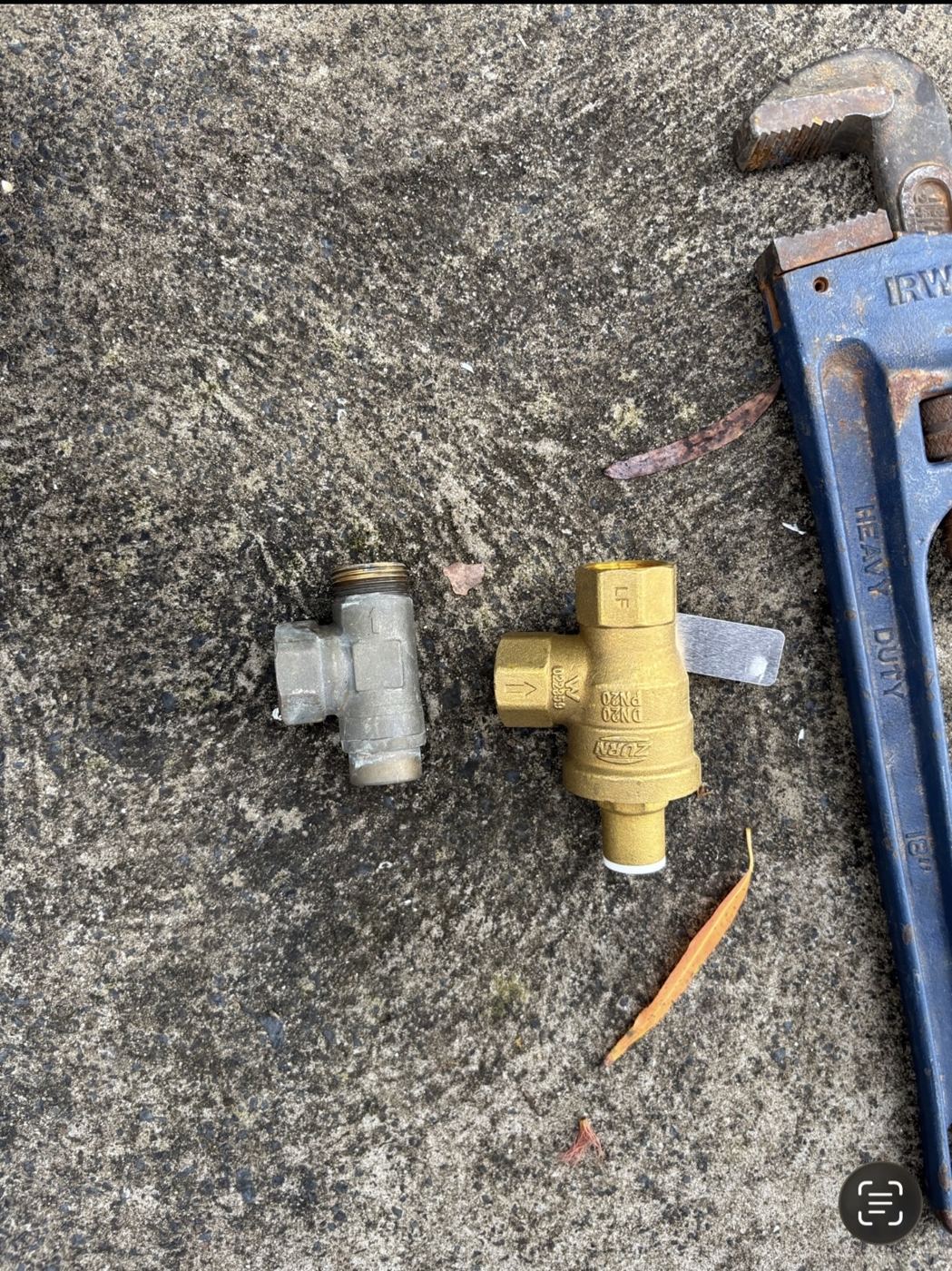
Weak showers, taps that take forever to fill a pot, and a washing machine that runs slowly can all point to the same small part: the pressure limiting valve, or PLV.
What a pressure limiting valve does
Water pressure in the street mains can be much higher than household plumbing is designed for. A pressure limiting valve, usually fitted just after the water meter, brings the pressure down to a safe level for your pipes, taps, hot water system and appliances. Australian Standards set a maximum pressure at household outlets, and a PLV is how most homes stay within it.
How they fail
PLVs have internal springs and seals that wear out over the years. When they fail, it usually happens one of two ways:
- Stuck partly closed: the valve chokes the flow, and pressure drops at every tap in the house at once.
- Stuck open: full mains pressure gets through, causing banging pipes, dripping taps, and a hot water relief valve that keeps leaking.
How to tell if it's the valve
The giveaway is that the problem affects the whole property, not just one tap. If only one shower is weak, it's more likely a blocked shower head, a worn mixer cartridge or a problem with that branch of pipe. If everything dropped at the same time, the PLV is a prime suspect.
The fix
Replacing a pressure limiting valve is usually a quick job. The water is turned off at the meter, the old valve comes out, a new one goes in, and pressure is checked at the taps. On a recent job the difference was immediate: full pressure at every tap and shower in the house.
Showers gone weak? Call or text Rory on 0450 882 910, or book online.